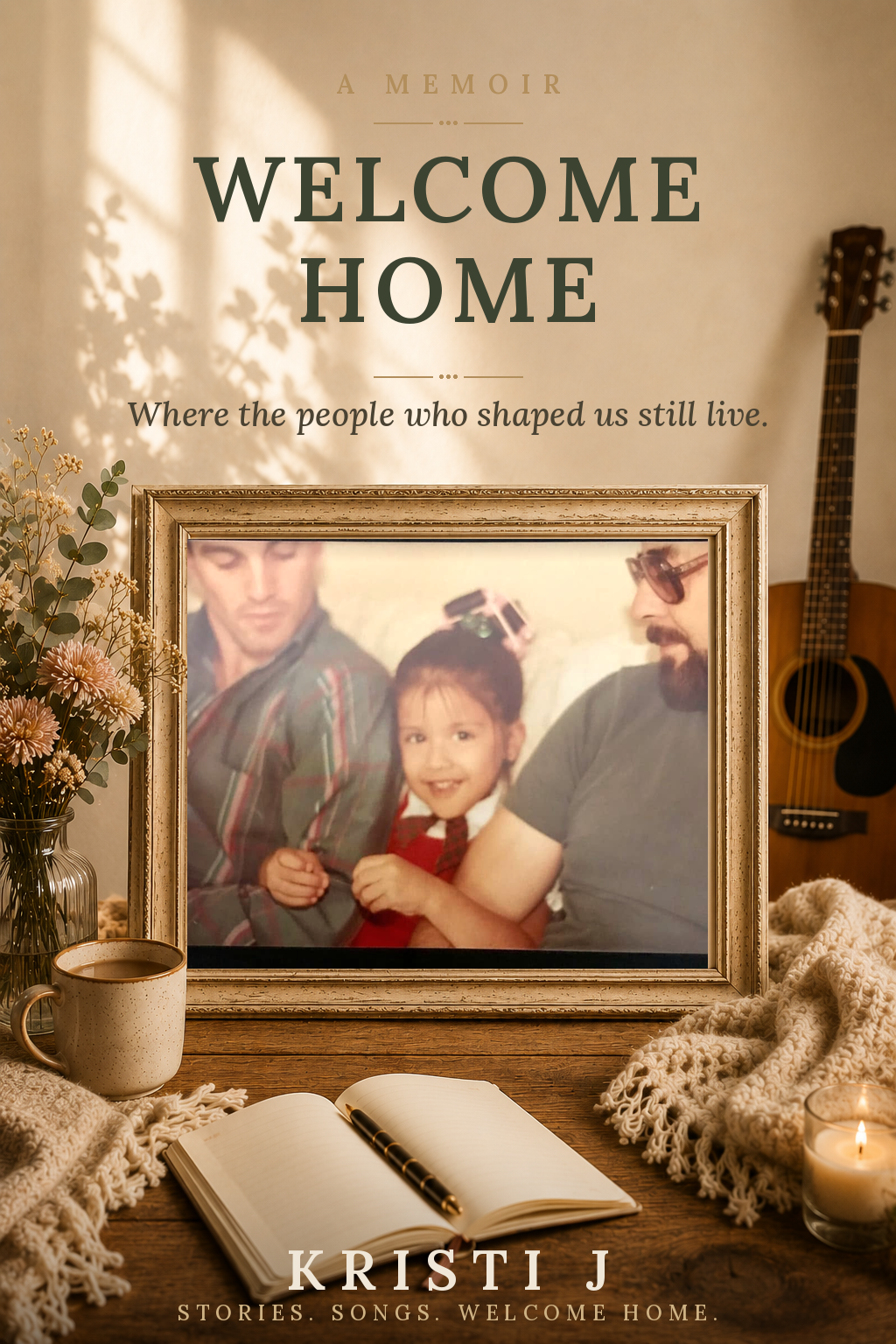
I'm sitting across from a California girl who packed up her life and moved to Austin, Texas, in 2015.
She's forty-six years old.
She's a businesswoman.
A mother.
A sister.
A friend.
A lifelong entrepreneur.
She's helped people buy and sell businesses, mentored professionals, owned a successful salon, built communities, and spent decades cheering for everyone else's dreams.
Now, for the first time, she's preparing to share something deeply personal of her own.
Her first song.
If you looked only at the headlines, you might think this is the story of a woman reinventing herself.
It isn't.
It's the story of a woman finding her way back to herself.
The first thing you notice about Kristi J isn't her music.
It's the way she listens.
She has the rare ability to make people feel like they matter.
Perhaps that's because she's spent most of her life carrying other people's stories before she ever considered sharing her own.
When I ask her what inspired her debut single, “Do I Miss You or the House We Built,” she smiles thoughtfully.
“People think it's a divorce song,” she says.
Then she gently shakes her head.
“It's really not.”
Not entirely.
“It's about grieving a life.”
That answer changes everything.
A little girl in California
Long before there was a marriage…
Long before there was a house…
Long before there were children…
There was a little girl growing up in California.
An only child with a loving mother and a supportive father who weren't together as a couple.
She spent summers and school breaks with her Aunt Helen and Uncle Ronnie.
It was there that something inside her began to dream.
“I always wanted one boy and one girl,” she tells me.
“I wanted them close together.”
Then her cousins Tyler and Jordin were born.
“They were my first babies.”
She watched family dinners.
Sibling laughter.
Ordinary afternoons.
She watched a home filled with love.
“I wanted my children to always have someone they could count on.”
Not because she lacked love growing up.
Because she had seen how beautiful family could be.
Maybe, without realizing it, she was already beginning to understand what home meant to her.
Not simply a house.
People.
Belonging.
A place where you knew you mattered.
One more minute
Years later…
Her dream came true.
Marriage.
Children.
A home.
The kitchen she had imagined as a little girl.
When I ask what she misses most, she doesn't talk about romance.
She closes her eyes.
“I walk into the house after a long day at the salon.”
“I hear music.”
“The kids are sitting at the counter.”
“We're making hamburgers.”
“They're singing.”
“We're laughing.”
Then her voice softens.
“I wish I could just open the door…”
“…and peek inside for one minute.”
Not to change history.
Not to stop the future.
Just…
One more minute.
That's when I realize something.
She's not grieving only a marriage.
She's grieving a season.
She's grieving little feet running across hardwood floors.
She's grieving bedtime routines.
She's grieving a version of home that no longer exists in the same way.
She isn't simply asking if she misses a person.
She's asking if she misses the life they built together.
“It was beautiful when it was beautiful”
The remarkable thing about Kristi's story is what it isn't.
It isn't bitter.
It isn't accusatory.
It isn't about assigning blame.
Instead, she says something I'll never forget.
“It was beautiful when it was beautiful.”
She pauses.
“And really…”
“It still is beautiful.”
In a world that often tells us we have to erase the good once something ends, Kristi offers another way.
“You can love people for where they're at,” she says.
“They just don't have to sit at the dinner table with you anymore.”
That may be one of the wisest definitions of healing I've ever heard.
Grief that began much earlier
But grief didn't begin with divorce.
It began much earlier.
When Kristi was seven years old, someone she deeply loved—Ana—died of cancer at just twenty-nine years old.
“I've been grieving her my whole life.”
There is no drama in her voice.
Only honesty.
Ana's memory stayed so deeply rooted in Kristi's heart that years later she named her daughter Anabelle in her honor.
Some people inherit jewelry.
Some inherit recipes.
Kristi inherited remembrance.
From a poem to a song
The song itself wasn't born in a recording studio.
It began as a poem.
“I wrote it to help me grieve.”
It remained private for months until a friend gently challenged her.
“What if this became a song?”
She laughs remembering how frightened she was.
“I was terrified to go into the recording studio.”
Then she did something brave.
She walked in anyway.
When I ask what she felt hearing her finished recording for the very first time, she doesn't mention nerves.
She doesn't mention perfection.
Her first words surprise me.
“I was really proud of myself.”
Then she says something even more profound.
“I used to believe that if I could do something, anybody could.”
She smiles.
“That's simply not true.”
Not everyone can perform brain surgery.
Not everyone can build a business.
Not everyone can write songs.
God gives each person different gifts.
“My hope is that people realize they are amazing in their own right.”
Those words aren't about talent.
They're about worth.
This little light
Then our conversation takes an unexpected turn.
I ask her what joy means today.
Without hesitation, she goes all the way back to childhood.
“My very first solo was This Little Light of Mine.”
She was only five years old.
She didn't know then that the words she sang would one day become part of the story of her own life.
For decades, she poured herself into everyone else.
Her cousins.
Her younger brother.
Her children.
Her clients.
Her community.
She became the dependable one.
The encourager.
The example.
Then one day she realized something.
“I don't have to shine my light.”
“I get to shine my light.”
She smiles as she says it.
“And I never have to dim it for anybody again.”
It's impossible not to think about that five-year-old girl standing in front of a congregation, singing about letting her light shine.
She had no idea that more than forty years later she would finally understand what those words meant.
Purpose, not popularity
When I ask who Kristi J is beneath all the titles, she doesn't mention success.
She simply says,
“My passion is people.”
“I want to help people turn grief into something beautiful.”
Not erase grief.
Not outrun grief.
Transform it.
As the afternoon continues, another theme quietly emerges.
Strength.
Not the kind that pretends everything is okay.
The kind that's born from surviving what you thought would break you.
“If I could whisper something to my younger self,” she says, “I'd tell her… You don't have to be strong. You're stronger than you already know.”
When I ask what she hopes her children someday understand, her answer carries no resentment.
“I hope they know I did what I thought was best for me and for them… even though it hurt.”
“And I hope that hurt becomes strength in their own lives.”
There is extraordinary grace in those words.
Toward the end of our conversation, I ask perhaps the simplest question of the day.
Who is Kristi J?
She smiles.
“I'm not perfect.”
“I've made mistakes.”
“I haven't always handled grief the right way.”
“But every morning my goal is simply to be a better person than I was yesterday.”
Not better than someone else.
Better than yesterday.
Then comes the question that changes the room.
If someday, after a life well lived, God were to speak to her…
What would she hope He says?
Without hesitation she answers:
“I'm proud of you, My daughter. You fulfilled your purpose.”
Not…
“You sold millions of records.”
Not…
“You became famous.”
Purpose.
Not popularity.
That distinction seems to guide everything she does.
What the music leaves behind
Near the end of our interview, I ask what she hopes her music leaves behind.
She laughs first, quoting a favorite comedy movie.
Then she grows quiet.
“I want people to know that they're amazing in their own right.”
Whether they're artists.
Teachers.
Business owners.
Parents.
Scientists.
Mechanics.
Surgeons.
Or someone quietly rebuilding a life no one else sees.
Every person carries a gift.
Every light matters.
Finally, I ask one last question.
Imagine your final concert.
The applause has ended.
You turn around one last time.
You get one sentence.
What do you say?
Kristi doesn't hesitate.
“Thank you for helping me find my voice.”
As I leave, I realize she wasn't talking only to an audience.
She was thanking every chapter that shaped her.
Every person who believed in her.
Every heartbreak that softened rather than hardened her.
Every memory that taught her to hold beauty and grief in the same hand.
When I arrived, I expected to meet a first-time recording artist.
Instead, I met a woman who had finally given herself permission to use the voice that had been there all along.
Her debut single may be called “Do I Miss You or the House We Built.”
But after spending an afternoon with Kristi J, I suspect her music is asking a much bigger question.
What if grief isn't the end of your story?
What if it is part of the road that leads you home?
Home to your voice.
Home to the people and memories that shaped you.
Home to the parts of yourself you may have forgotten along the way.
And perhaps that's the real reason people will listen.
Not because she sings about loss.
But because she reminds us that even after loss…
There is still light.
There is still purpose.
And there is still a song waiting to be sung.